
Mould-resistant, neat-line silicone for showers, baths, vanities and skirting. Full removal of failed silicone, proper prep, one continuous bead.
Silicone in a bathroom does two jobs. It seals out water, and it absorbs the small daily movement between tile, stone, glass and metal. When it fails, and most fail within two years if applied badly, water gets into the substrate, mould grows behind the bead, and the line yellows and shrinks away from the surface.
Seliecone applies premium-grade, mould-resistant silicone to every wet-area joint in a bathroom. We strip the old silicone fully, prep the joint, and lay a single uniform bead. Same standard on a single shower reseal or a thirty-unit project handover.
Every bathroom job covers the following as standard. Anything outside this list is quoted separately and confirmed before work starts.
Full removal of failed silicone (no leftover residue)
Joint prep, clean, degrease, mask
Mould-resistant silicone (Soudal or equivalent)
Shower screen and glass perimeter sealing
Bath, vanity and basin joints
Skirting and floor-wall transitions
Colour-matched bead where required
Surface cleanup on completion
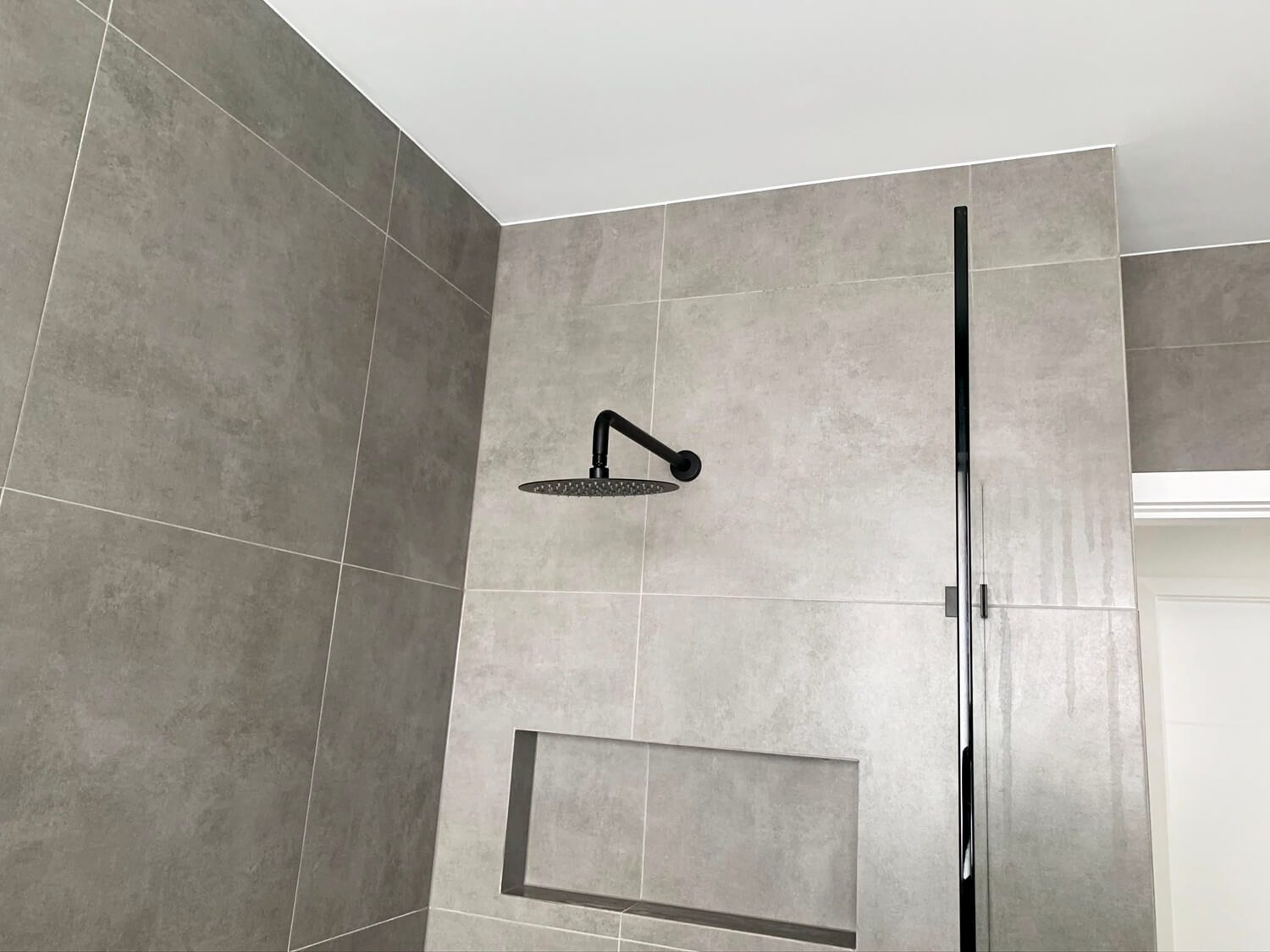
Silicone in a shower or bath rarely fails all at once. Shower resealing is worth booking when you notice:
Once silicone begins to fail, moisture can get behind the joint and into areas it should be protecting. Replacing old silicone before that happens is the simplest way to keep a bathroom watertight.
A proper reseal is mostly preparation. We strip every trace of the old silicone, treat any visible mould on the surface underneath, then clean, degrease and mask the joint. A single uniform bead of mould-resistant silicone goes in and the area is cleaned up on completion. Most single-bathroom reseals are a half-day job.
The silicone will usually skin over quickly, but we recommend leaving the area untouched for at least 24 hours before use so the sealant has time to cure properly. Properly prepped and applied, bathroom resealing should last 5 to 7 years.
Resealing and waterproofing do different jobs. Waterproofing is the membrane that sits beneath the tiles and forms the watertight base. Caulking is the flexible silicone bead at the surface joints between tile, glass and other materials. Both are needed in any wet area.
Once tiles are down, resealing the joints is the practical option. Replacing the membrane itself means removing the tiles and installing a new waterproofing system. Send us a few photos and we will tell you honestly which option fits your bathroom.
Material selection is part of the work. We use professional-grade Soudal and Maxisil mould-resistant silicones as the default for wet areas, chosen for fast cure, long-term mould resistance and a food-safe finish once cured. A Pasco wet-area silicone on lighter residential resealing, and a premium-grade silicone where a higher cure and adhesion profile is needed.
Areas we serve: We provide this service across all Sydney regions, including Sydney CBD, Eastern Suburbs, Inner West, North Shore, Northern Beaches, Western Sydney, Sutherland Shire and the Hills District. See all service areas.
We quote from photos. Send through a few photos of the shower or bathroom and we will usually come back with a written quote the same day.
If several joints are ageing or showing similar wear, resealing the whole bathroom in one visit can be better value than returning later for individual joints. We can advise from photos whether a full reseal or a smaller repair makes more sense.
No. Waterproofing is the membrane beneath the tiles that stops bulk water. Resealing replaces the silicone at the surface joints, which stops surface seepage. Both are needed in any wet area.
A properly prepped and applied silicone bead in a wet area should last 5 to 7 years before it needs replacement. The two things that shorten that lifespan are poor prep (silicone over silicone, residue not removed) and using a non-mould-resistant product in a high-humidity area. We do neither.
Always. Applying new silicone over old is the most common reason resealing fails within months. We strip the joint completely, treat any mould or staining, and prep the surfaces before laying the new bead.
A clean reseal with a mould-resistant product will prevent mould growth inside or under the silicone for years. Mould on the surface still requires basic bathroom ventilation and cleaning, but the bead itself will stay clear.
We recommend leaving the silicone untouched for 24 hours after application. The bead is touch-dry within an hour, but full cure takes a day. After that, normal use is fine.
Yes. We carry the standard range (white, translucent, grey, black, beige) and can colour-match to grout or stone for premium jobs. Worth flagging when you book so we bring the right cartridges.
12 months workmanship warranty on residential bathroom resealing. If the bead fails (shrinks, lifts, or grows mould inside it) in that period, we come back and redo it at no charge. Manufacturer warranty on materials is separate and longer.
Tell us about your bathroom, we come back with a written quote the same day, usually within an hour.
For trade enquiries, large jobs or anything time-sensitive, call straight through. Mon to Sat, 7am to 5pm.
Drop your details below and we’ll be in touch the same day with a written quote. Or upload photos through the full contact page.
Get a quote, usually back to you the same day.